“Omnichannel” has become a buzzword—until you watch a patient get three mismatched messages in two days and decide to ignore all of them.
In patient engagement, omnichannel isn’t about being everywhere. It’s about being coordinated: delivering a message that matches the patient’s reality, at a moment when it helps, through a communication channel they’ll actually pay attention to.
Use the 4 C’s of omnichannel to design coordinated campaigns that feel useful—not spammy.
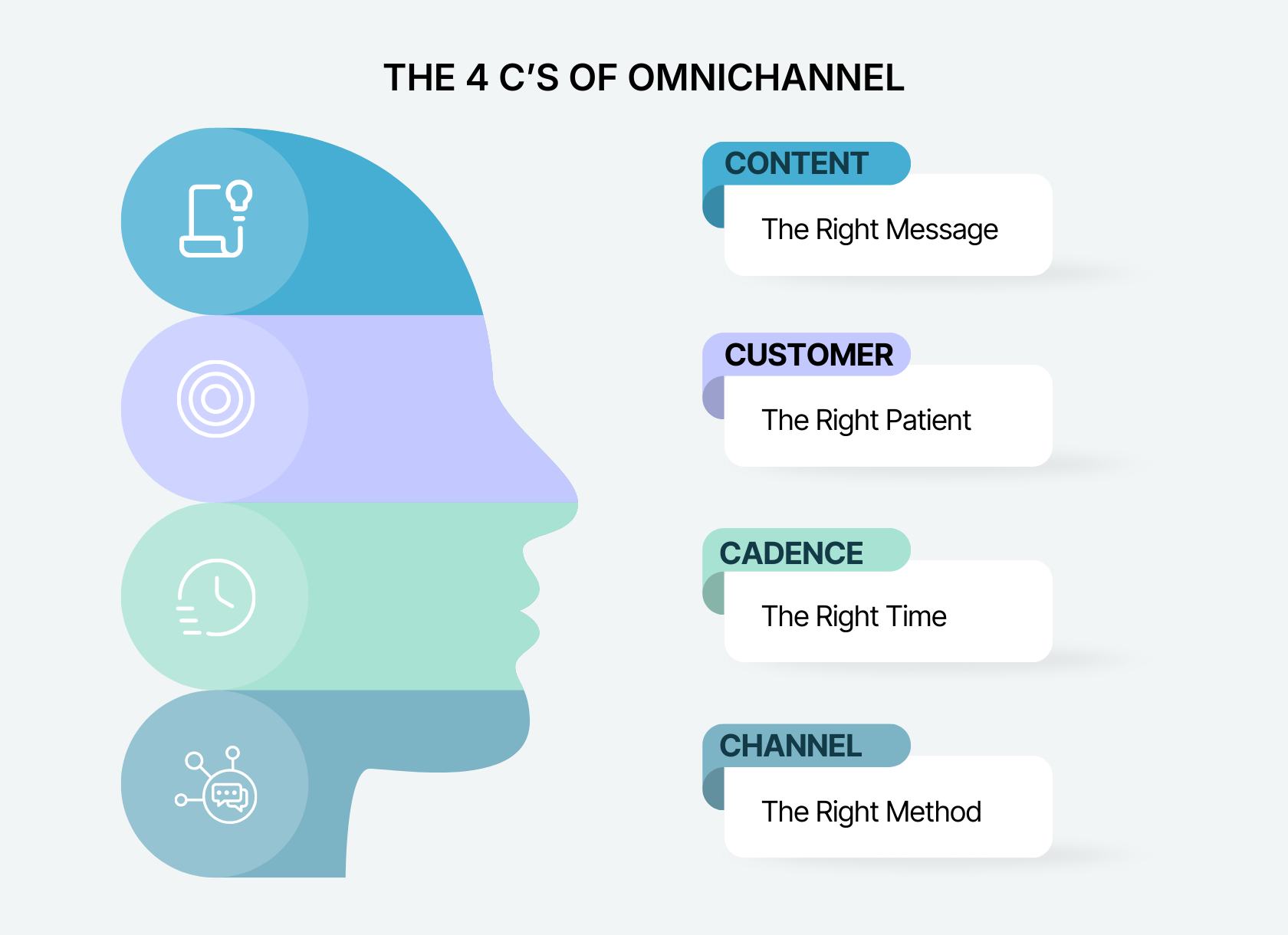
1) Content - the right message
For patient engagement, you’re not convincing people to buy your product because they have already initiated therapy, so you need to be crystal clear on what you’re solving for.
Are you helping them:
Hot Tip: You will need to design messages for all the above because every patient will be different, and they’ll experience varying challenges as they move through their treatment journey.
2) Customer - the right person
Patient segmentation works best when it’s based on context, not demographics. The most effective segments are based on:
Hot Tip: Data is king. To develop meaningful segments, manufacturers must identify patients by their Rx behavior and get that data quickly enough to act. It seems impossible with HIPAA, but chat with our experts to find out what’s possible.
3) Cadence - the right time
Timing is the hidden multiplier. The best message at thewrong time becomes the reason patients tune you out.
Whenever possible, build event-triggered campaigns(PA approved, shipment delivered, refill due) before calendar-based sequences.
Hot Tip: Predictive modeling will help you anticipate the right action and get the right message out ASAP. Speak with our experts to find analytics & data science partners who can help you implement.
4) Channel - the right method
This “C” carries regulatory risk and needs to be operationalized accurately. If your patient only signs up for emails, then make sure your campaign doesn’t allow phone calls or text messages to her. But if she decides to opt-in for more channels, determine what is the right algorithm for what message goes out as a text vs. email vs. phone call vs. snail mail and make sure it doesn’t get spammy!
Hot Tip: If you have multiple vendors involved (1 for nurse navigators, 1 for emails, 1 for text messages, etc.), then make sure they can all plug into a central “brain” that orchestrates which functions next.
The Takeaway
Great omnichannel programs aren’t louder—they’re smarter. They’re built around patient context, governed with clear rules, and orchestrated so every touch feels like progress.
Next Steps
Want to pressure-test your program? We can run a 4C campaign review and deliver a launch-ready orchestration plan: data requirements, patient segments, possible triggers, content modules, and KPIs.
Interested in what we can deliver? Get in touch.

.png)

